
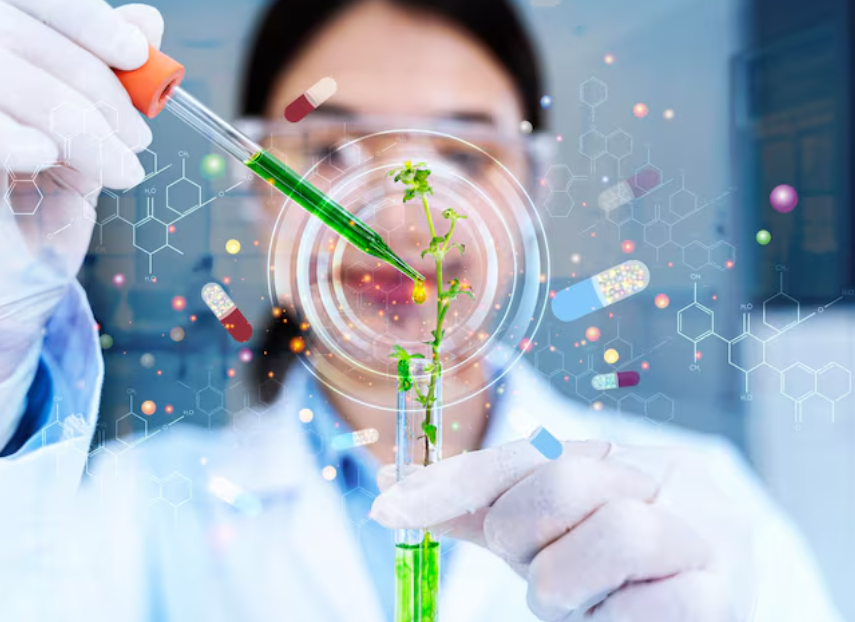
The healthcare business is going through a huge change, moving away from one-size-fits-all treatments and toward more individualized ones. Nexomic supports this transformation through Pharma biomarker co-creation, which is at the center of this change. It is a new way of combining biological knowledge with drug development. This partnership between new drugs and finding biomarkers makes it possible to make treatments that are safer, more effective, and more accurate for patients.
Modern medicine doesn’t treat everyone the same way anymore; instead, it looks for specific molecular patterns to help choose the best treatment. As research that uses data and omics grows, Pharma biomarker co-development has become the basis for tailored medication discovery and clinical translation.
Using data and omics to find predictive insights
The combination of artificial intelligence (AI) and multi-omic science is changing the way we think about human biology. Scientists can find molecular markers that help them predict how well a treatment will work by analyzing genomes, proteomics, and metabolomics. These predictive markers let doctors figure out how a patient will respond to a certain therapy, making sure that treatments are as effective as possible.
- AI-driven analysis speeds up the process of finding important biomarkers.
- Multi-omic integration improves the precision of patient stratification.
- Predictive modeling reduces the need for trial and error in choosing a treatment.
Pharma biomarker co-development and therapy response prediction are changing what it means to provide precision care on a large scale with these technologies. Nexomic continues to pioneer this integration, bringing innovative approaches to data-driven healthcare.
Connecting Science and Clinical Use
To turn research results into real-world treatments, scientists, doctors, and technologists need to work together without any problems. Pharma biomarker co-development is a key way to close this gap since it connects the discovery of molecular indicators with information on how well drugs work. Researchers and doctors can work together to come up with ideas that directly affect patient outcomes through this method.
Biomarkers found in the early stages of research, for instance, can help plan targeted clinical studies. This makes it easier to forecast how well a therapy will work, lowers development costs, and speeds up the time it takes for life-changing drugs to hit the market. Nexomic plays a crucial role in this collaboration by enabling seamless integration between scientific discovery and clinical application.
Collaborative intelligence gives power to new ideas.
Innovation happens when knowledge and purpose come together. Now, groups of doctors, scientists, and engineers are working together to make health solutions that are smarter and based on data. This synergy makes it possible to create predictive models that not only anticipate therapeutic response outcomes but also help improve existing medicines so that they work better.
- Working together across disciplines speeds up innovation.
- Combining data makes biomarkers more useful for predicting outcomes.
- Clinical feedback loops keep making therapy alignment better.
As Pharma biomarker co-development gets higher, the healthcare machine can make better, more proof-based choices. This brings custom designed medicine towards becoming a fact.
The Part AI Plays in Predicting How People Will Respond to Therapy
In state-of-the-art healthcare, artificial intelligence is an essential tool. It makes it viable to quick observe massive multi-omic datasets and discover patterns that would otherwise be hidden. AI fashions may observe patient profiles, treatment histories, and biomarker interactions to signify the exceptional treatment plans for each person in relation to predicting how well a remedy will work.
This smart way of doing things lowers the chance of therapies that don’t work and helps doctors give the proper medicine at the right time. Combining AI with Pharma biomarker co-development can help the medical industry move from reactive to proactive healthcare, where diseases are predicted before they happen. With Nexomic, these advanced analytics are driving the future of personalized patient care.
Conclusion
As the world enters a new era of omic-powered medicine, the collaboration between Pharma biomarker co-development and therapeutic response prediction will shape the future. These fields are no longer optional; they are necessary parts of healthcare systems of the next generation. Together, they make sure that every medical breakthrough gets to people faster, safer, and more efficiently. Visit nexomic.com to find out more about how Nexomic and data-driven precision medicine are changing healthcare.
